

Marketing your book shouldn’t feel painful
Wondering how to sell books without feeling like a fraud? Worried about turning your magnum opus into a cheap product? We’ll walk you through the valley of marketing your book so you can make the sales you need without sacrificing your integrity.
This post contains affiliate links. Please see my affiliate link disclosure here.
Turning a marketer’s eye to your novel or nonfiction book
It’s no secret that most authors hate marketing. Self-published and traditionally published writers alike tend to prefer the creative side of things, leaving the business end to someone else. And for a long time, that was how things worked. Publishers did the heavy lifting when it came to making sales. They had to.
But then the internet came along and changed the publishing landscape in a dozen different ways. Aspiring authors could suddenly reach people all across the world. And as social media developed and the print-on-demand industry boomed, publishers started expecting authors to handle a lot of the marketing themselves. Nowadays, an established social media following is a significant factor in whether or not your manuscript will get picked up. And, of course, for indie authors, you’ll definitely be the one marketing your self-published book.
So while self-publishing and social media eliminated some barriers, they created new ones. What happens to authors who don’t want to turn their identity into a brand? How can writers who hate marketing make it in the self-publishing world? It isn’t easy, but it’s probably a little easier than you think. Here’s the scoop on how to sell books when you hate sales.
2 big myths about marketing your book
Marketing your book doesn’t have to feel like a betrayal to your artistic side. In fact, we’ll help you figure out how to sell books in a way that enhances their artistic value. The trick is simple: Believe in your product. If your novel or nonfiction book is well-written, if the right audience will benefit from reading it, then marketing can become a breeze.
First, things first, though. Let’s briefly go over what marketing is not, so we can dispel any inaccurate ideas you may have.
Myth #1: You should target the largest audience possible
Unless you’re working with one of the big 5 publishers to get on the New York Times’ Bestseller List, you should not be trying to sell your book to a wide audience. For self-published authors and authors working with smaller presses, you need to “narrowcast” your marketing net.
Narrowcasting is a form of targeting marketing. And it works particularly well for small presses and self-published authors. Instead of trying to appeal to everyone—or even everyone in a broad demographic—you target your marketing toward a niche audience. Not only are you more likely to sell to people when you market to their specific interests, but those readers are more likely to leave you positive reviews. It’s not about how to sell books to the largest crowd, but to the most devoted fans.
Myth #2: Marketing means selling out
In Anne of the Island, by L.M. Montgomery, well-meaning Diana secretly submits Anne’s manuscript to a writing contest. The manuscript wins, and Diana is delighted when Anne receives a check compensating her for her submission. The downside is that the contest was in service of advertising Rollings Reliable Baking Powder. Diana made two small tweaks to Anne’s original story, so that now the heroine is a happy customer of Rollings Reliable.
In the chapter titled “A Dream Turned Upside Down,” Anne describes her feelings about it (after Diana has gone home). She says, “What do you think a mother would feel like if she found her child tattooed over with a baking powder advertisement?”
Like Anne, you’ve poured your best effort and skill into your book. Trying to distill it to a handful a tropes and comp titles feels like, as Anne put it, sacrilege. Fortunately, as long as you care about your writing, you’ll understand how to sell books without selling out.
What marketing your book really means
We Are Seven has over a decade of experience writing sales copy and ad copy, so take it from us: marketing is always easier (and more ethical!) when you believe in what you’re selling. And as the author, no one should believe in your book more than you. Ultimately, marketing your book simply means telling people why they’ll love it.
Step 1: Narrow your net
If you want to know how to sell books without feeling icky, it’s simple. Make sure you’re pitching them to the right audience. Find the narrowest, most specific category that your book fits into. A wlw historical supernatural romance involving fake-dating is more likely to successfully find its target audience when it’s marketed as such than it would if dumped into the romance genre more broadly. Yes, your book is more than a collection of tropes, but those classifications are part of it. And those are the only parts that people can connect to before reading it.
We’re working on an upcoming blog all about narrowcasting for authors. If you’re interested, sign up for our mailing list so you’ll know when it’s available.
Step 2: Lean into your tropes and comps
There seems to be this idea that if you can compare your book to another book, then your book must not be very original.
“It’s The Hunger Games if…”
“It’s The Lord of the Rings meets…”
When you make these comparisons, you’re not saying you’ve taken the premise of your comp titles and added a few twists. You’re saying, “If you’re a fan of this book, you’ll probably like mine, too, because they have some similar elements.” That’s all. Remember, before someone reads your book, all you can do to give them an idea of whether it’s the right book for them is to describe it. And that often means comparing it to something better known.
As to the tropes, even if you don’t write genre fiction, you probably haven’t come up with a never-before-seen story type. Tell potential readers what to expect and you’ll get a more favorable reader response. Between comp titles and trope lists, you’ll give a potential buyer a fair idea of whether or not they’ll like your book.
This is how to sell books to readers who will love them.
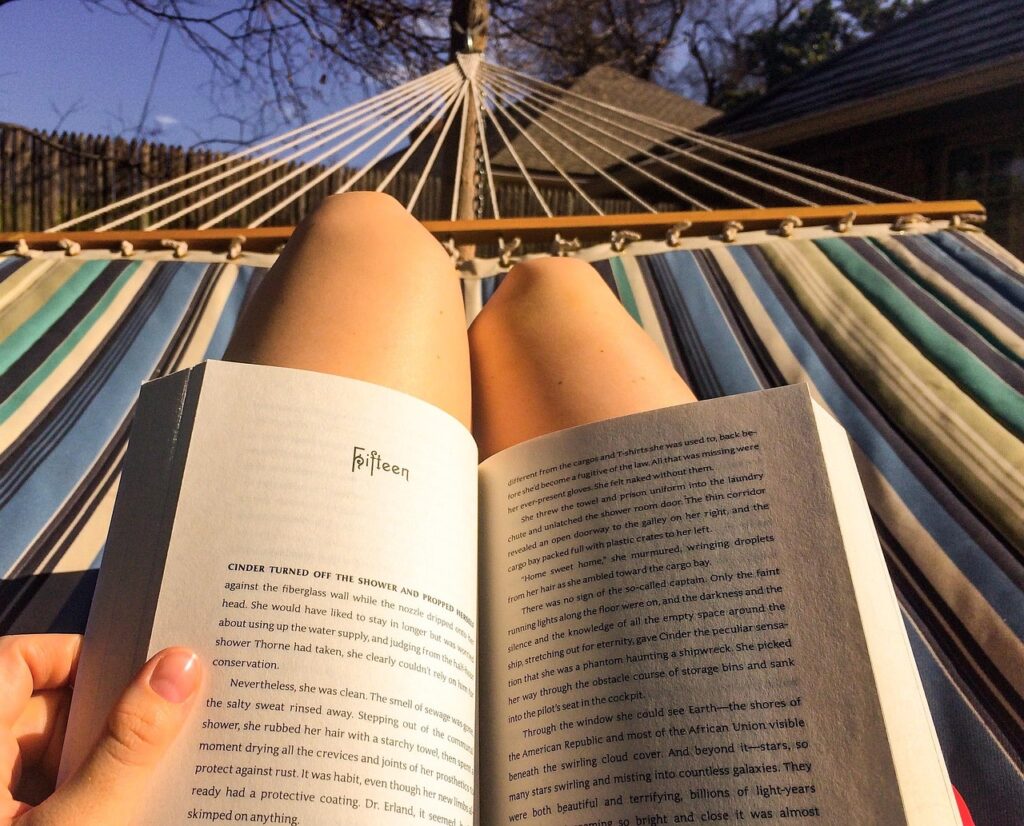
Remember, they’re not buying your book to read Sarah J. Maas. They’d pick up a Sarah J. Maas book if they wanted that. They’re reading your book to see what you do differently with the themes and story elements they already enjoy.
Step 3: Talk to your ideal reader
When you write preorder posts, pitches, ads, or social media posts about your book, talk to the person who wants to read it. This is the natural result of doing the first two steps, but it’s worth stating it directly. Every bit of sales copy you write should be targeted at the person who would absolutely love your book. That’s the beauty of narrowcasting—that person is out there. In fact, there are hundreds (if not thousands or tens of thousands) of them. You’ve written something that’s real and meaningful to you, and there are tons of people who want to experience it.
By targeting your marketing toward that person, you’ll lose the interest of anyone who won’t like it (leading to better reviews) and attract those who will (leading to more sales).
How to sell books to the right readers
If you love your books, you can find your readers. And if you know your books, you know how to sell books. I want to come back to the scene from Anne of the Island I mentioned earlier. Anne is still early in her writing career at this point. In fact, the Rollings Reliable-branded story will be her first publication. She is understandably sensitive to criticism and, consequently, takes rejection personally. After just two rejections, she decides she won’t try to publish it anywhere else.
If she had been more like another semi-autobiographical fictional writer, things might have gone differently. Jo March of Louisa May Alcott’s Little Women, was unabashed about her melodramatic genre fiction, and as a result was published routinely. While, granted, Jo learns that writing salacious fiction is immoral and gives it up, I think there’s still a worthwhile comparison to make here. Jo March wasn’t trying to be a lofty, literary writer, while Anne (initially) was. Jo understood the market for her work and submitted it until she found a publisher.
Regardless of what type of writing you do—whether it’s trope-heavy genre fiction, self-help nonfiction, or anything else—know your work. Be confident that the right readers are out there (they are), and invest your marketing effort, time, and money toward finding them.
If you have a finished book, the time for uncertainty has passed. After all the beta reading and editing is done, be resolute. Your goal is not to find acceptance from readers. It’s to find your readers. So lean into everything that your book is and let everyone else know what it is, too.
Do you have any tips for how to sell books without feeling like a sell-out? Share your advice in the comments below.
This post was written by a human for We Are Seven without any input from generative AI. For more information or permissions, please contact us.
Feature image by Cory Salgado.



Leave a Reply