
Online Art Portfolio, Web Store, or Indie Art Gallery?
We’ve said before that your artist website should serve multiple purposes. But one of those needs to take prominence. If you’re in the process of applying to art schools, then it should probably be an online art portfolio. Likewise, if your current goal is earning a living with your art, it should be a shop first. The purpose of your site can shift over time as your goals change. But when it’s time to design, you need a clear target.
Why you need an artist website
Let’s look more closely at possible design goals and discuss how yours will affect the look and function of your site.
Here are some of the most common reasons to build an artist website:
- To earn commissions
- To get hired
- To be accepted to a school or residency
- To build your brand / grow a following
- To sell your artwork
- To attract patrons/investors
Now, let’s break each of these down.
Earning art commissions
If the main reason you want an artist website is to get commissions, then your path forward is relatively simple. You need a site that showcases your skill and offers an easy way for people to hire you. That means your site should function as an online art portfolio with a form or “buy” button on every page. The very first thing a visitor should see is a prominent commission form, like the one below.
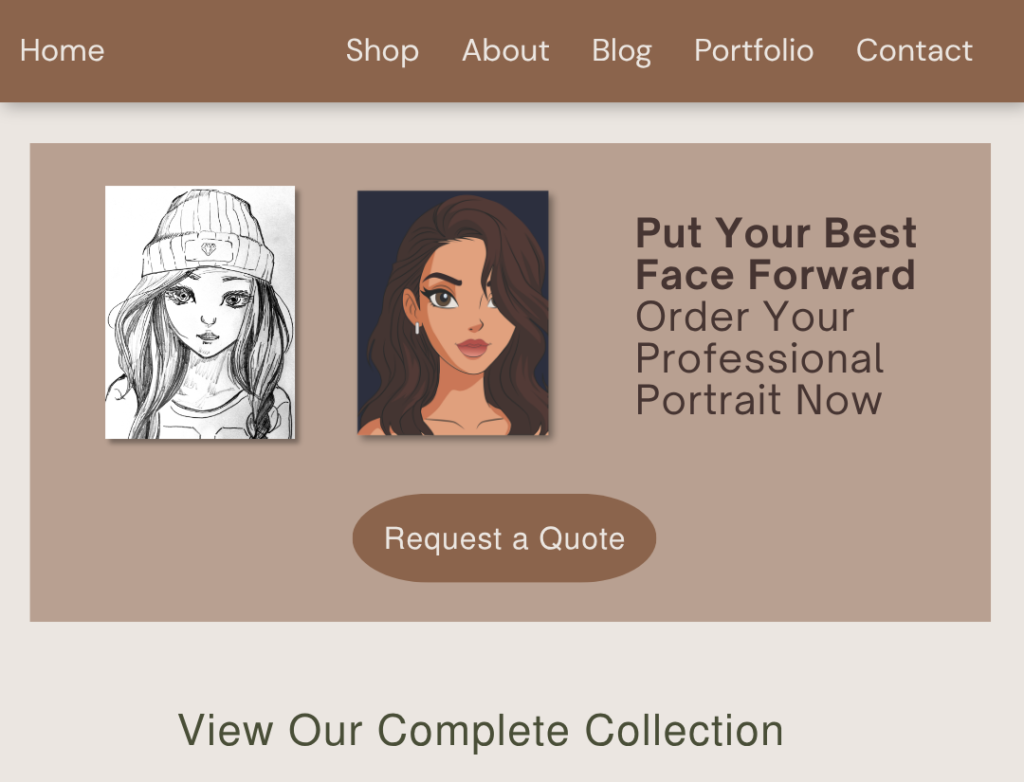
Only after you’ve made your website’s purpose clear should you show examples of your work. It’s fine to include a link to your art shop in your site’s navigation—just make sure you have a commission form (or a product listing for commissions) on that page as well.
Getting hired as a commercial artist
Do you need an artist website to share with prospective employers? Then your site needs showcase you as an artist before it showcases your artwork. An online art portfolio is vital, but secondary. Make sure your homepage sales copy, as well as each item description, highlights your experience and education.
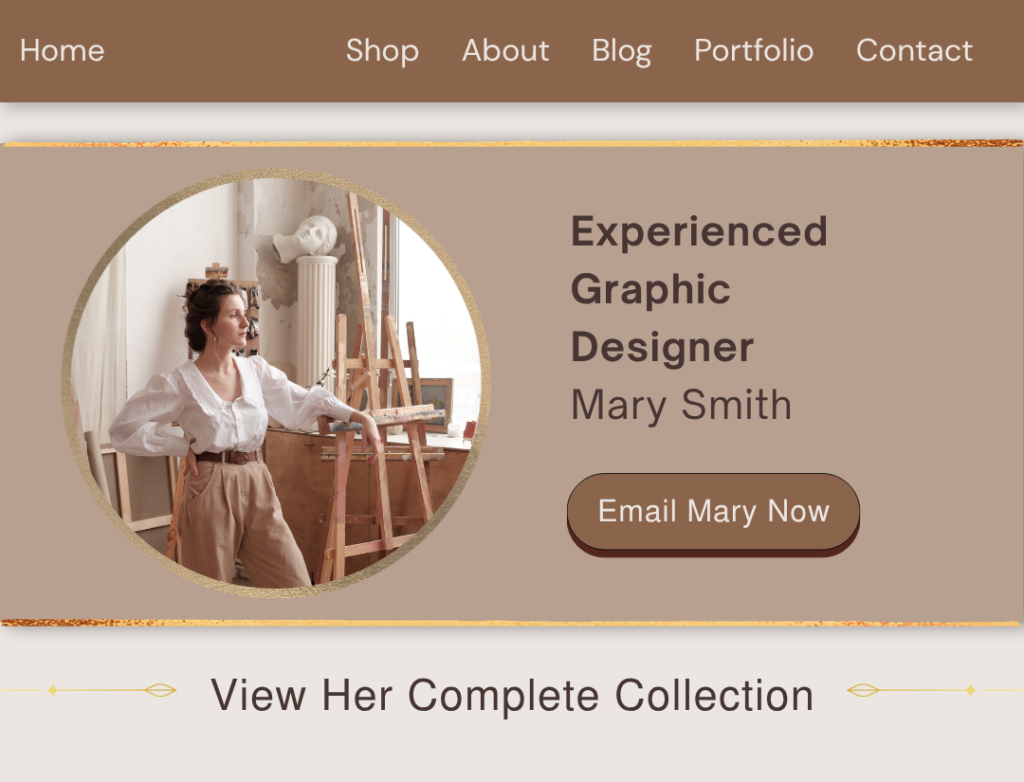
Feel free to offer artwork for sale and solicit commissions as well, but not on your homepage. A navigation link and one or two subtle homepage links is all you need.
Being accepted into an art school or artist’s residency
When applying to art school or an artist’s residency, you need an online art portfolio that will stun anyone who sees it. Don’t rely on just an image gallery; each piece should have its own page with pertinent information, such as the year it was created, materials used, and your own notes or reflections on the piece.
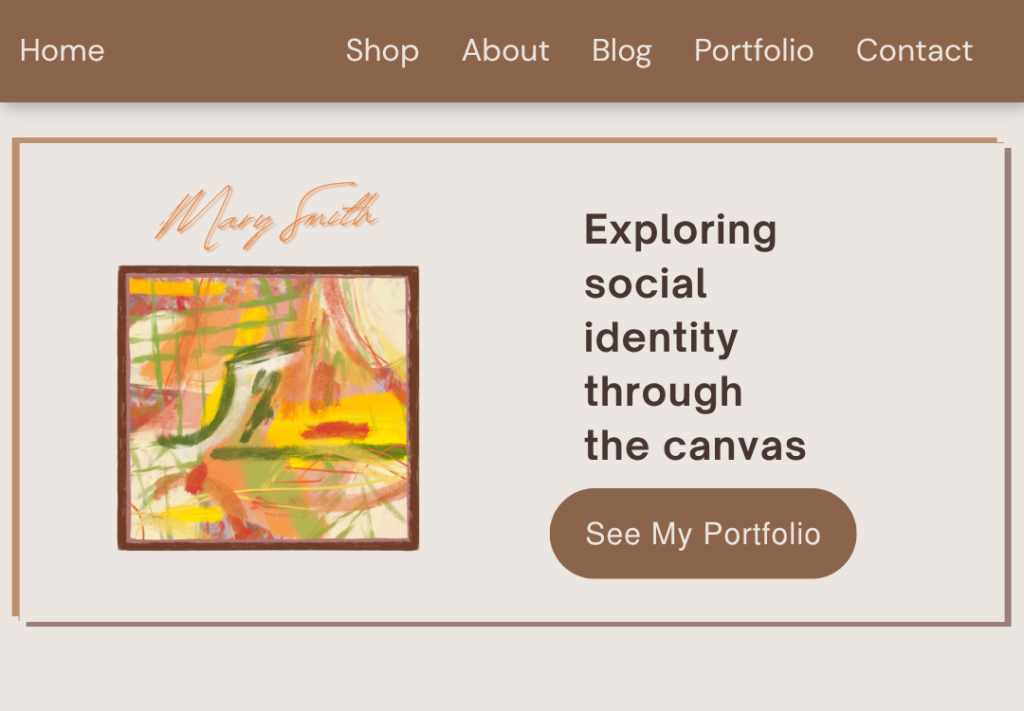
Depending on how large and broad your body of work is, you can create categories (dividing your work by materials used or type of work—such as completed pieces, sketches, and so forth). Anything else, like a blog or a store, should be secondary and available only through navigation links or subtle links on the homepage.
Building your art brand
Designing an artist website to help build your brand can seem tricky at first. Should it be mostly a portfolio, so fans can get to know your style? Or should you prioritize a shop, since your end goal is earning a living? Maybe you should focus on blogging, so you can curate your artistic process for views.
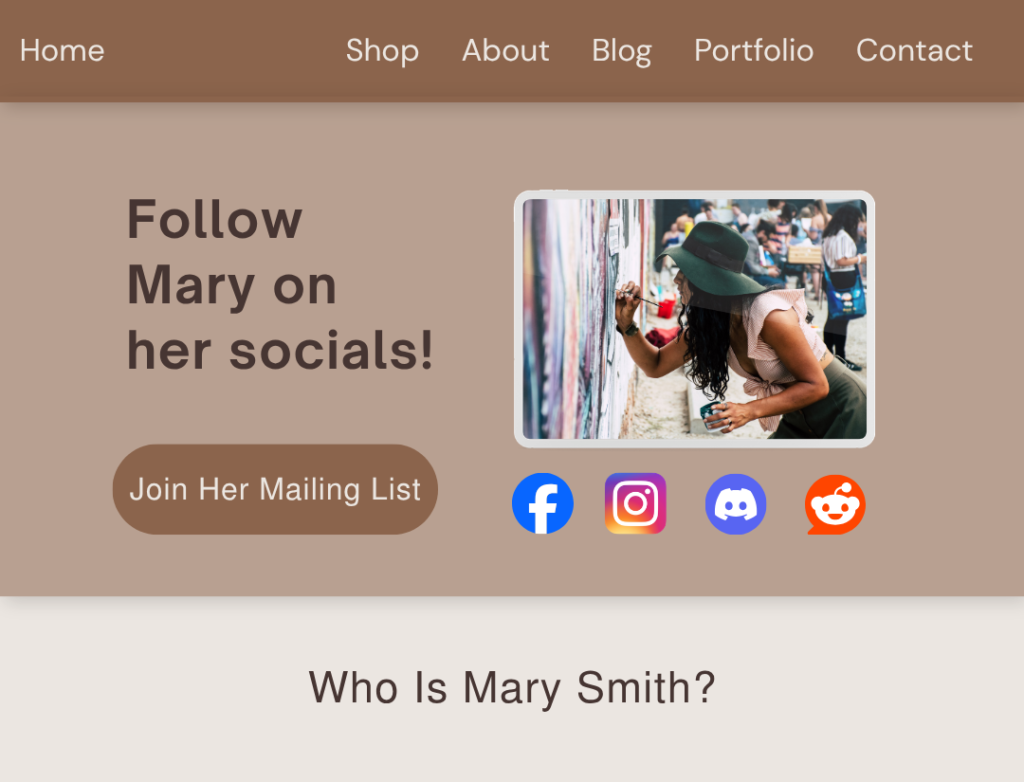
Our advice is to make your artist website a hub, a sort of online station directing your fans to your various accounts, your shop, your online art portfolio, and more. Clearly, you can have a shop, a blog, a portfolio, and all the rest as part of your site. But the focus should be uniting all the various social media platforms and other aspects of your brand. Your handles and links should be prominent, and nothing should be more prominent than your mailing list.
Selling your artwork
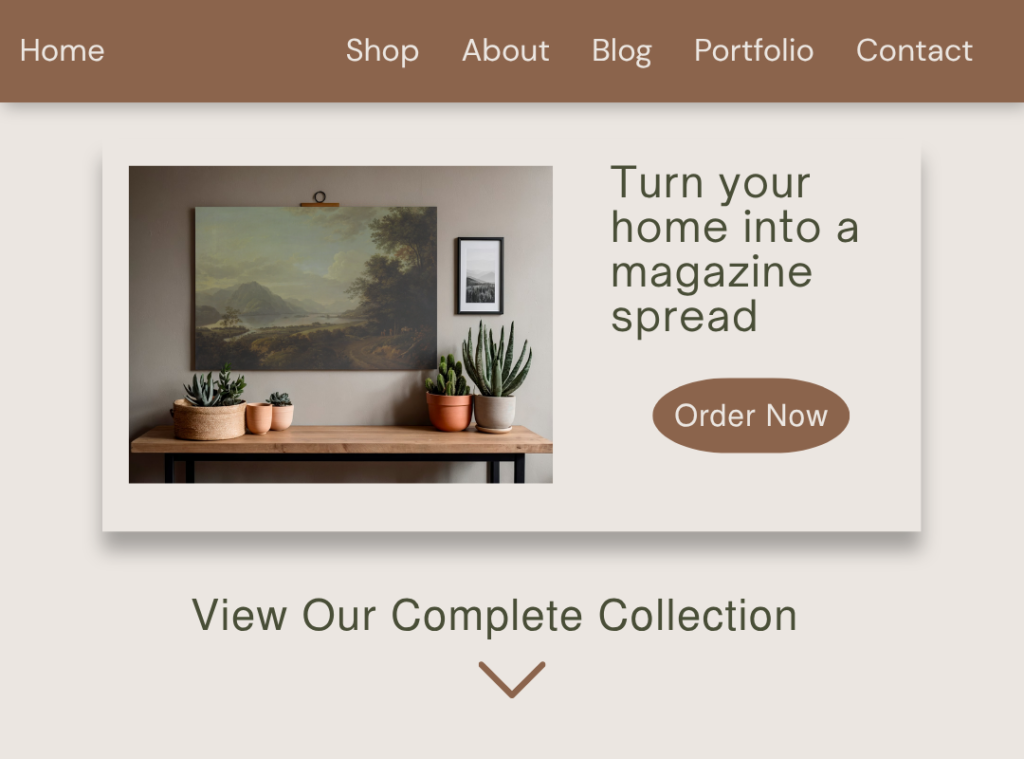
Want to make some money selling your art? It should be obvious that your artist website ought to function as an online store. But many artists feel uncomfortable putting the “buy” button front and center. As we often say, you can’t be bashful when promoting your work online. With a bit of good web copy and a sales-centric design, you can build an ideal store for your artwork.
Attracting patrons or investors
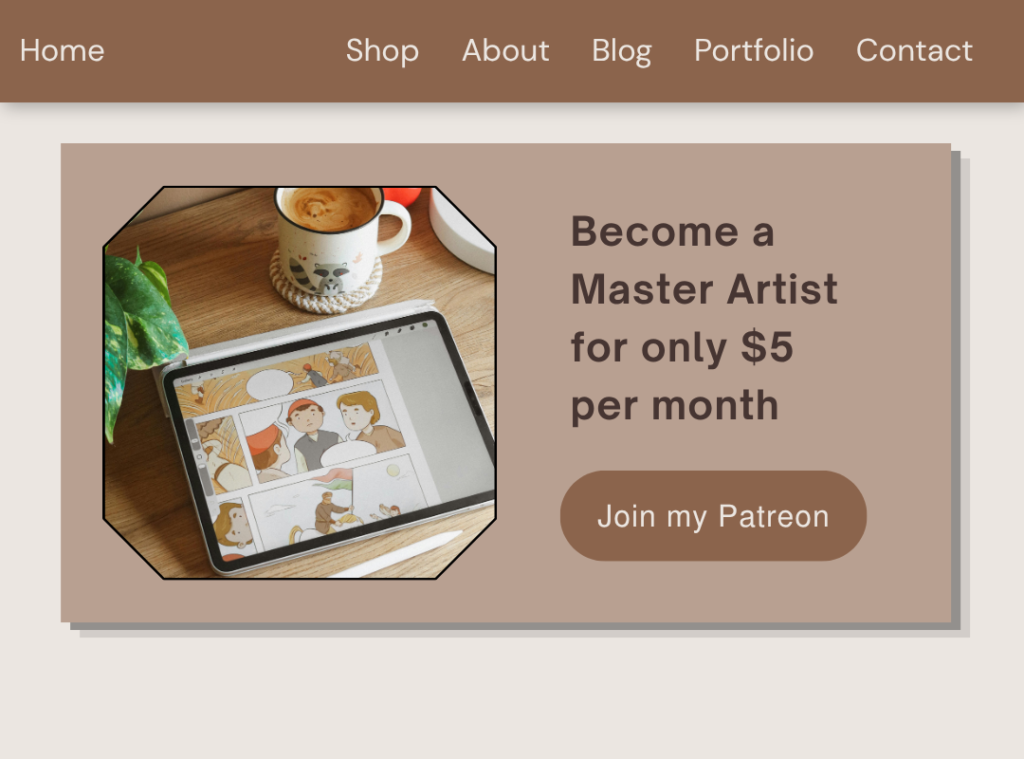
While having an online art portfolio is an important part of attracting patrons or investors, it shouldn’t be the main focus. Your goal is getting people to invest in your work, so your artist website needs to show viewers what they’re going to get out of it. As soon as visitors click on your site, they should see what your work offers them. That can be something concrete, such as reward tiers, or something a little more abstract, like the proliferation of human-created artwork.
An artist website for every season of your career
What if you need your website to do several things at once? Web building takes time, and professional web hosting costs money—you can’t afford multiple sites for different purposes. We understand completely. As we said earlier, the purpose of your website can change over time. A well-designed and practically coded artist website will be easy to tweak as time goes on. If you want to focus on selling your artwork, but eventually want to apply to a residency or a new commercial art job, it should be no great struggle to rearrange your homepage. In doing so, you can give your entire site a different context.
If you’re using a web builder, you can easily switch out content on your main page. Working with WordPress? Make sure the theme you choose allows you to easily swap out widgets. And if you’re hiring a custom website designer, discuss your current and future needs with them so that your backup content is ready to go as soon as you need it.
If you’re interested in building an AI-free website, visit our Pricing page to see our website design packages.
Feature image provided by: u_du2myex0v5
This post was written by a human for We Are Seven without any input from generative AI. All material is copyrighted and may not be used to train generative AI. For permissions, please contact us.


Leave a Reply