
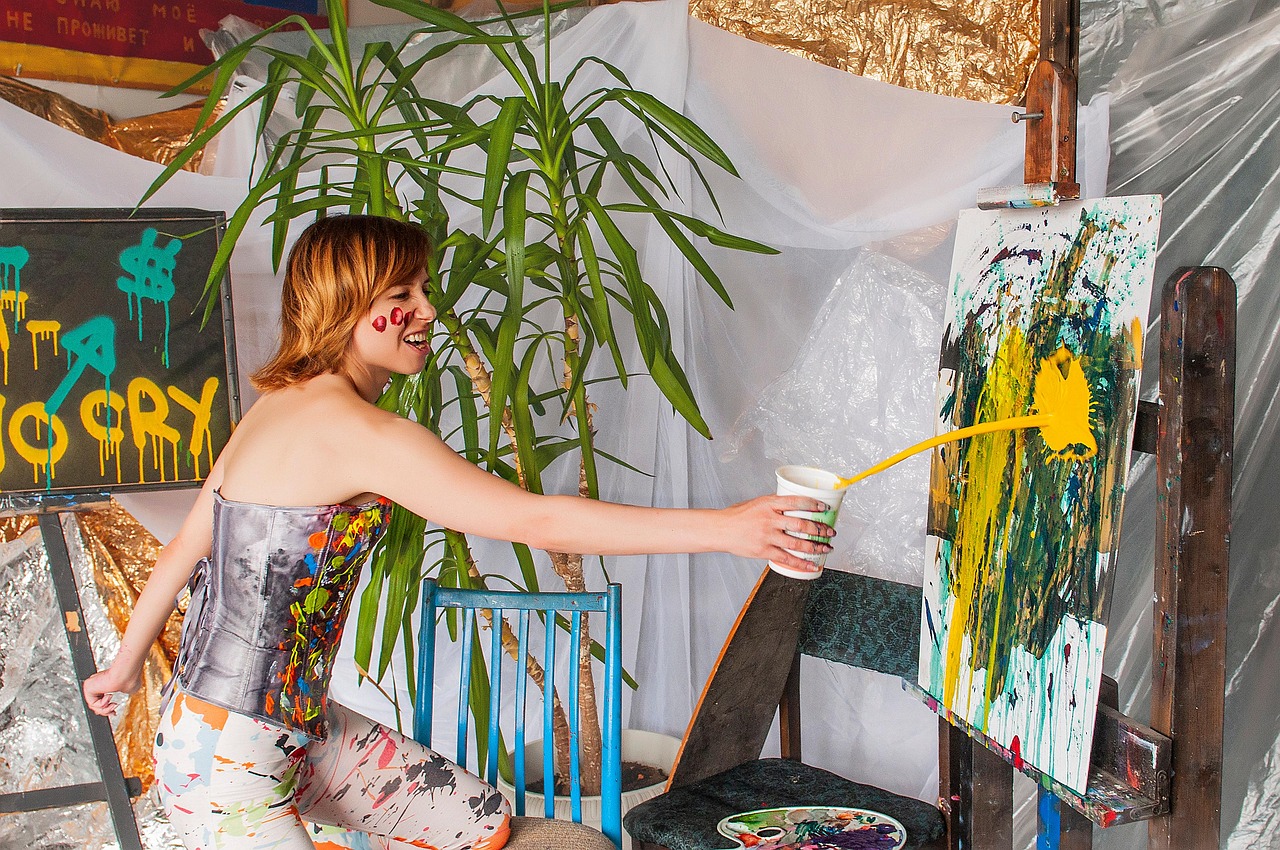
How to turn your artist website into an exhibition
In the age of “AI art,” people are searching for creators with intention. They want something that goes beyond an image in a frame; they want art in context. Your own artist website is the perfect way to deliver that. But creating an online art portfolio that highlights your personality is no easy task, even for highly creative people.
As an artist, you already know you need a website. It’s vital to helping you secure commissions as well as admission to institutions, retreats, and other opportunities. But if you want to make a name for yourself, creating a standard online art portfolio is not enough. You need a platform that will showcase not just your work, but who you are as a creator.
In this post, we’ll explain how to structure your artist website for a successful user experience. We’ll also go over how to infuse every part of its design with your personality (or persona).
The Structure of Your Online Art Portfolio
Let’s start with the framework. Every website with multiple pages should have a home page and a contact page. But what should you put in between them? Here are the pages we recommend you build, in order of importance.
An art gallery
This is the most essential part, so let’s start here. Your online art portfolio should, clearly, be a place to showcase your artistic style, range, and accomplishments.
While your artwork is a deeply personal representation of you, it’s also the product you’re trying to sell. This is not the time to be humble. When structuring your portfolio, be sure to:
- Categorize, then sub-categorize
- Create a page for each piece
- Clearly mark which items are for sale (specify original or print)
You aren’t using the portfolio section of your artist website as a shop, but you should still give each piece it’s own page where you can extol your vision, creativity, and technical skill.
A note on protecting your work: The question of how much artwork you should share for free has gotten more complicated in the last few years. AI scraping is a real concern for artists, so we recommend using a tool like Glaze to protect your creative work.
An art store
This should be separate from your art gallery. You want prospective employers, residency admissions directors, and academic admissions counselors to see a professional, online art portfolio, not a shop. And while we reiterate that you should specify which pieces are for sale and provide a link, it shouldn’t be a products page.
However, you ought to have a products page for people who are solely interested in what they can buy. Browsing through piece after piece that’s no longer available, or is available only as a print or original, is going to frustrate buyers quickly. The solution? A separate shop page.
Building an online store for your artist website may feel daunting, but affordable, easy-to-use options abound. We personally recommend WooCommerce, if you know your way around WordPress. You can also use services like Shopfiy, Wix, or Squarespace. Alternatively, you could start an Etsy store and embed it on your website using WordPress.
Discussing the various methods of dropshipping prints is beyond the scope of this particular blog, but it is something we’ll go over in the future. Sign up for our mailing list to learn about our experiences and recommendations.
An “About the Artist” page
Your online art portfolio should be about you, the artist, not just your art. An “about” page is the bare minimum you need to present yourself as an individual. Without this, your website is representing a collection of artwork, a company. Not a person.
We’ll talk more about how to write a good “About the Artist” page in the future, so subscribe to our socials to be notified.
An artist’s blog
While many people advise building a blog for SEO purposes, blogging has other benefits. Sharing a portion of your life—even if it’s just a slice of your professional life—will allow your audience to connect with you. This is where you can wax poetic about your inspiration and your process. We’ve placed this last on the list, but it’s far from unimportant. When it comes to helping your audience see you as a real person creating art from your lived experience, a blog is the simplest method.
The Design of Your Online Art Portfolio
Don’t think of your site as a museum; a bunch of white-walled rooms displaying separate pieces of art. Your artist website should be a work of art in itself. It needs to convey your style, of course, but also your inspiration. That could mean the source location for a landscape, the short story that got you thinking about a subject, or the artist whose work got you interested in your field. The website design itself should reflect your chosen medium, as well.
The following are artist websites that exemplify the type of design we’re talking about.
Artist Website: Lucy Knisley
Lucy Knisely is a comic artist. As such, the typeface used on her artist website looks blocky and handwritten. This instantly lets the viewer know what type of artwork she creates. The header image also expresses the slice-of-life tone that most of her work conveys. Without even scrolling, we have a good sense of the artist and the artwork.
The site’s navigation is also clear, showing straightforward categories and using drop-down menus to keep the information organized.
Artist Website: Teagan White
Teagan White draws precise, graceful illustrations of nature. Her works typically feature a subject against a stark background. So her online art portfolio design reflects this. The home page is bold, showing only Teagan’s artwork. The navigation menu is visible, but subtle. All the focus is on the art.
The rest of the site maximizes whitespace (something we don’t recommend by default, but which works well in this case) by limiting image size. While the text is smaller than recommended for general accessibility, the light gray color and italicized font create a gentle, graceful feel.
Both of these examples are quite different in style, but you can see the commonalities. Each one features:
- Clear, easy-to-access navigation
- A focus on the artist’s style
- An about page, an art gallery, a shop, and a blog
If you find yourself stuck for inspiration, I recommend studying these two sites. Notice the ways that they go beyond a basic online art portfolio and become centralized platforms for the artists.
Make your online art portfolio an experience
In a webscape filled with generic page templates and boilerplate web copy, let your artist website stand out. Show your admissions counselor, potential employer, or residency panel that you have a clear vision and a defined artistic style. And show them that from the moment your page loads.
An art teacher once told us that a piece is done when there’s nothing more you can take away from it. But rather than encourage minimalism, she said, “Let loose when you’re in the creative process. Tone it down afterward.” This is especially applicable with web design. We’re surrounded by bland, copy-and-paste web design. Err on the side of “too much” rather than “too boring.”
If you like our work, set up a consultation! We’ll be glad to design the perfect online art portfolio for you.
This blog was written by a human for We Are Seven without any use of generative AI. For permissions or questions, please contact us.
Feature Image by Sunriseforever


Leave a Reply